Context
Workflows are often described in informal, scattered ways: meeting notes, Slack threads, rough process descriptions, or half-written documentation. Turning that information into a structured workflow summary can take time, especially when the process includes unclear handoffs, missing assumptions, or gaps between teams and tools.
Problem
There is not always a fast way to move from an informal description of how work gets done to a structured, shareable output that can support analysis, documentation, process improvement, or next-step planning.
Approach
- I defined the input structure around plain-language workflow descriptions.
- I designed the output categories to mirror practical business analysis deliverables, including workflow summary, workflow stages, process flow, gaps and friction points, KPI/tracking logic, tooling suggestions, assumptions, and recommended improvements.
- I used AI-assisted prompting and iterative testing to translate informal workflow text into consistent, structured outputs.
What I Built
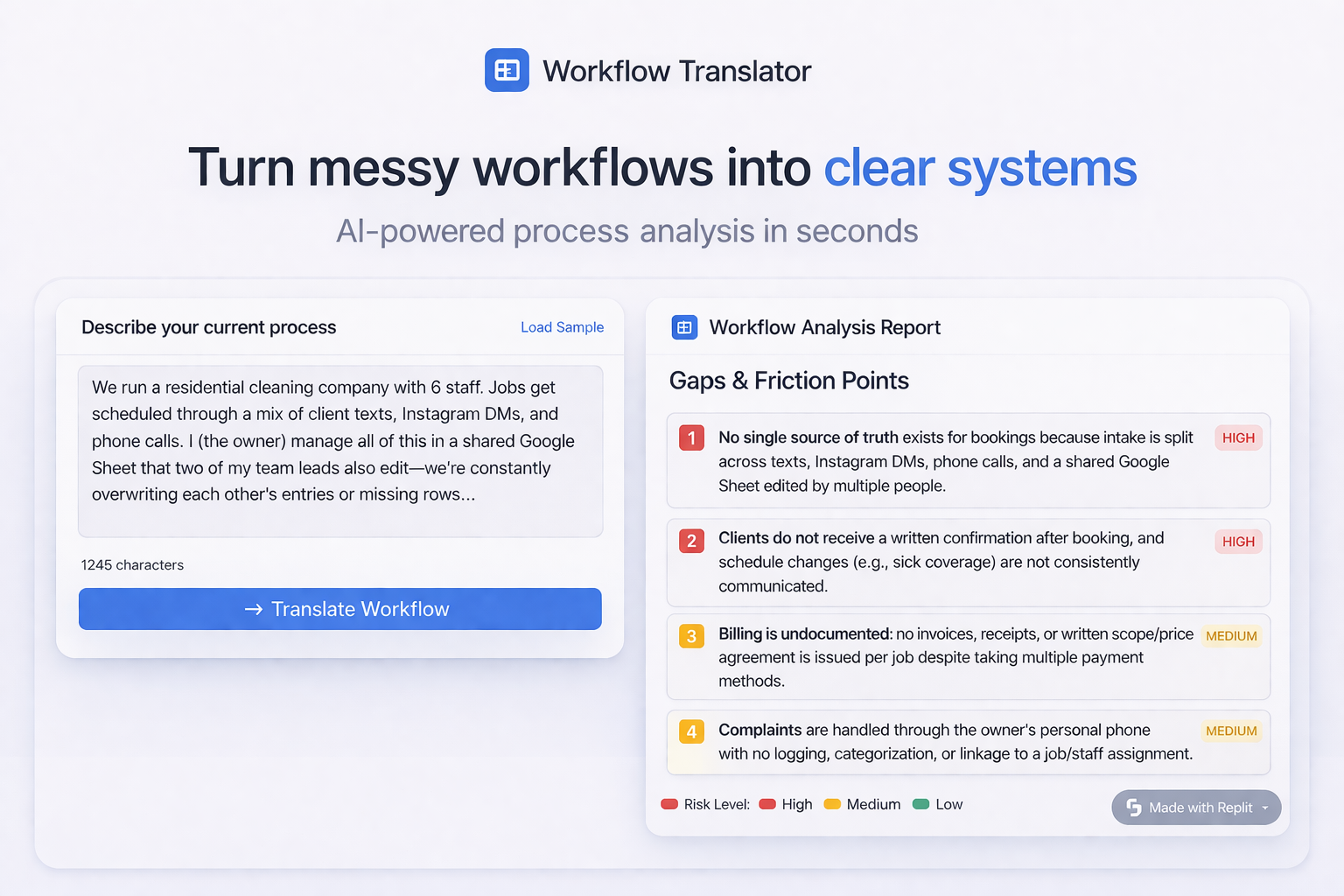
- A live AI-assisted web tool that accepts a plain-language workflow description and returns structured workflow analysis.
- Output sections for workflow summary, stages, process flow, gaps, KPI/tracking logic, tooling suggestions, first improvements, process type, primary failure mode, assumptions, and what the workflow enables.
- Prompt and result logic designed to make the output easier to review, edit, and use in documentation or planning.
Outcome / What It Demonstrates
Workflow Translator helps turn messy process descriptions into a clearer first draft for analysis. Instead of starting from a blank page, a user can begin with structured workflow stages, gaps, assumptions, KPI logic, and recommended next steps that can be reviewed and refined.
Lessons
- The schema matters as much as the model. The value comes from structuring the output in a way that supports real business analysis work.
- AI-assisted tools are most useful when they help people get to a better first draft, not when they replace human judgment.