Context
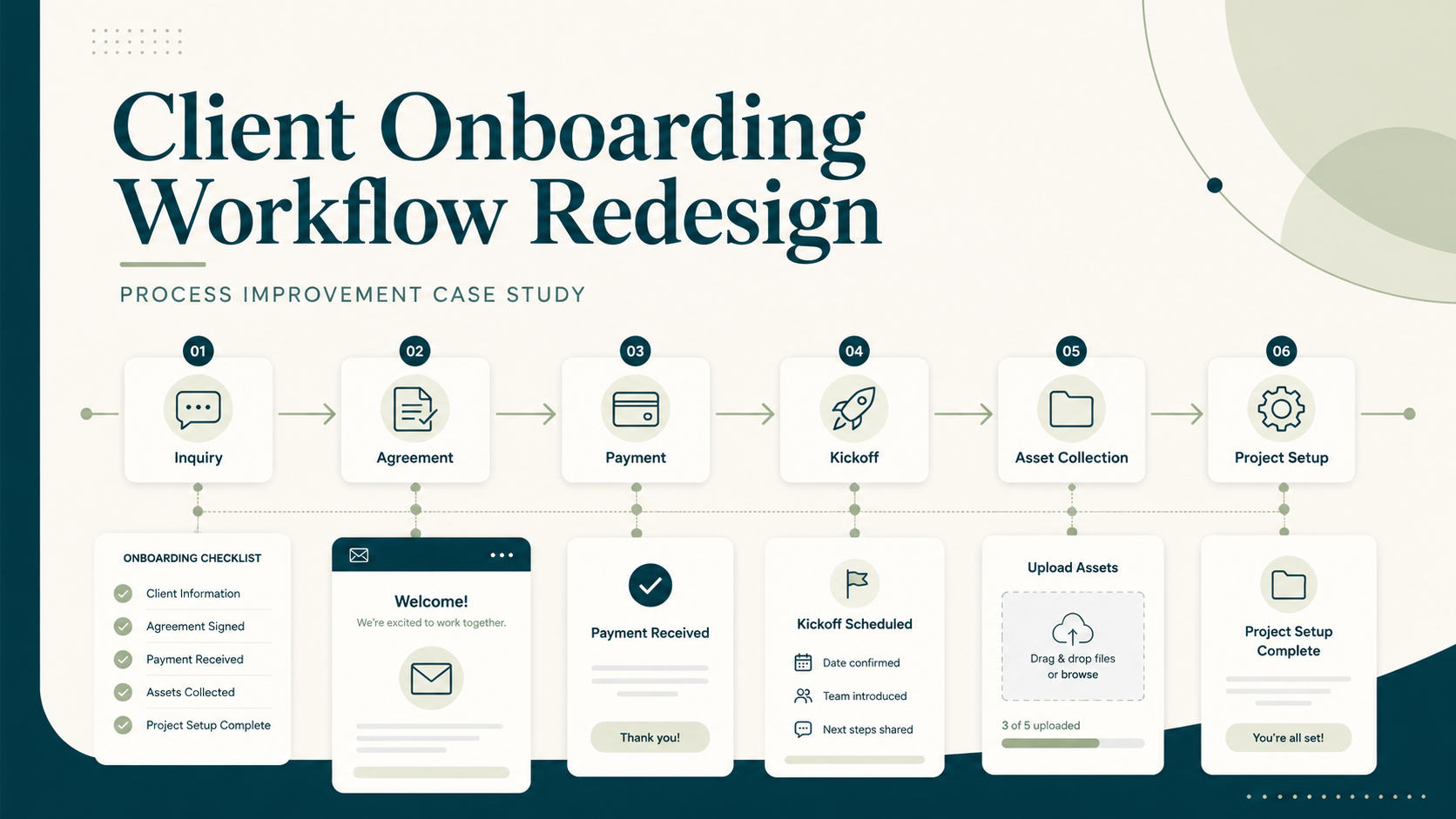
This case study shows how I approach workflow improvement for a service-based onboarding process. The scenario focused on a service-based entrepreneur managing multiple clients, inconsistent onboarding steps, scattered asset collection, and frequent back-and-forth communication. The goal was to create a simple, repeatable onboarding flow that reduced confusion, protected time, clarified expectations, and helped projects move from agreement to kickoff more smoothly.
Problem
The existing onboarding process was inconsistent and reactive. New clients did not always move through the same steps, which created confusion for both the business owner and the client. Contracts were sent inconsistently, deposits were sometimes collected late or after work had started, client assets arrived through emails, DMs, and scattered folders, and repeated follow-up was needed for missing information. Expectations around communication, timelines, and next steps were unclear.
Approach
- Identified key requirements: a clear intake path so clients know what to provide before work begins, defined handoffs between inquiry, agreement, payment, kickoff, and asset collection, standardized templates to reduce repeated clarification, a central place to track onboarding status and missing assets, and simple reporting logic to surface delays and bottlenecks.
- Mapped a recommended future-state workflow: inquiry received → client fit confirmed → agreement sent → deposit/payment completed → kickoff form submitted → assets collected → project workspace created → next steps confirmed.
- Designed reusable structure and templates the business owner could adopt without specialized tooling.
- Defined proposed success metrics to make the redesign measurable once adopted.
What I Built
- Before-and-after snapshot showing how the onboarding experience could shift from scattered and reactive to clear, organized, and predictable.
- Client journey map for the future-state onboarding flow, showing where agreements, deposits, expectations, asset collection, and project setup should happen.
- Onboarding checklist covering contract signed, deposit paid, welcome email sent, assets collected, shared folder created, and communication expectations confirmed.
- Welcome email template explaining what happens next, where to upload files, how to communicate, and what dates or milestones to expect.
- Asset upload system using a dedicated folder structure with labeled subfolders so clients can upload materials in one place instead of sending files across multiple channels.
- Proposed success metrics: time from inquiry to kickoff, percentage of clients with agreement and payment completed before kickoff, number of follow-up messages needed to collect required assets, and percentage of onboarding steps completed on time.
Outcome / What It Demonstrates
The redesigned onboarding workflow was built to support faster movement from inquiry to kickoff, fewer misunderstandings, less manual follow-up, a more consistent client experience, and better visibility into onboarding status and incomplete steps. Success was defined through proposed KPIs rather than measured post-launch results.
Lessons
- Structured workflow design can reduce friction in an early-stage service process without requiring complex tooling.
- Defining handoffs, templates, and a single place for assets removes most of the repeated back-and-forth in client onboarding.
- The same approach can be adapted across teams, service businesses, and operations workflows where inconsistent handoffs, missing information, or unclear expectations slow work down.